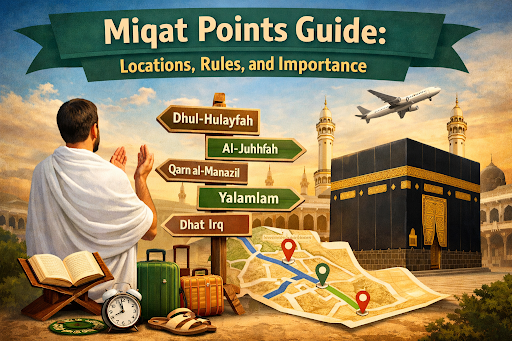
 For every Muslim preparing to perform Hajj or Umrah, understanding Miqat points is essential. These designated boundaries are not just geographical markers; they carry deep religious significance and guide pilgrims on when to enter the sacred state of Ihram. Without proper knowledge of Miqat, a pilgrim may unknowingly commit mistakes that can invalidate their journey. This guide explains the locations, rules, and significance of Miqat points in a clear, simple way.
What Are Miqat Points?
Miqat points are places set by the Prophet Muhammad ﷺ where pilgrims must enter Ihram before going to Makkah. Ihram involves specific clothing and rules, such as refraining from cutting hair, using perfume, and arguing.
These boundaries ensure that every pilgrim approaches the holy city with the same level of spiritual preparation and humility. Crossing a Miqat without entering Ihram is not allowed and requires compensation (Dam) under Islamic law.
The Main Miqat Locations
There are five primary Miqat points designated for pilgrims coming from different directions. Each Miqat serves people travelling from specific regions of the world.
1. Dhul-Hulayfah (Abyar Ali)
This Miqat is for pilgrims from Madinah. It is the farthest from Makkah and is used by those visiting the Prophet’s Mosque before Umrah or Hajj.
2. Al-Juhfah (Rabigh)
This Miqat is for pilgrims travelling from Syria, Egypt, and North Africa. Today, many people enter the Ihram at Rabigh, which is near the original location of Al-Juhfah.
3. Qarn al-Manazil (Al-Sail Al-Kabir)
Pilgrims from Najd, including Riyadh, use this Miqat. It is one of the most commonly used Miqats due to the large number of travellers from central regions.
4. Yalamlam
This Miqat is for pilgrims arriving from Yemen and the southern regions. Many international flights also pass over this area, making it relevant for air travellers.
5. Dhat Irq
This Miqat is for pilgrims from Iraq and the nearby countries. It is less used now but remains important in Islamic law.
Each Miqat ensures pilgrims from all directions enter Ihram before reaching Makkah.
Rules of Miqat Points
Knowing Miqat rules is crucial. They help ensure your journey follows Islamic teachings.
Entering Ihram Before Crossing Miqat
A pilgrim must wear Ihram and make the intention (niyyah) before crossing the Miqat boundary. This applies whether travelling by land or air. For air travellers, it is recommended to prepare in advance and enter the Ihram before the plane crosses the Miqat.
Intention and Talbiyah
After wearing the Ihram, the pilgrim must make the intention for Hajj or Umrah and begin reciting the Talbiyah:
“Labbaik Allahumma Labbaik…”
This begins your pilgrimage.
Prohibited Actions in Ihram
Once in Ihram, certain actions become prohibited, including:
- Cutting hair or nails
- Using perfume
- Engaging in arguments or disputes
- Hunting animals
These restrictions help keep pilgrims focused on worship and purity.
Penalty for Crossing Without Ihram
If a pilgrim crosses without Ihram, they must return and enter Ihram, or offer a penalty (Dam) if unable.
Importance of Miqat Points
Miqat points are more than boundaries; they have spiritual and practical importance in Islam.
Following the Sunnah
The Prophet Muhammad ﷺ himself established these Miqat points, making them an essential part of the pilgrimage. Observing Miqat is a way to follow his teachings and maintain the authenticity of Hajj and Umrah.
Spiritual Preparation
Miqat serves as a transition point where pilgrims leave behind worldly concerns and enter a state of devotion. Wearing the Ihram symbolises equality, humility, and submission to Allah.
Unity Among Muslims
Regardless of nationality, status, or background, all pilgrims follow the same rules at Miqat. This creates a sense of unity and brotherhood among Muslims worldwide.
Discipline and Obedience
Respecting Miqat teaches discipline and obedience to Allah. Small actions matter in worship.
Miqat Points for Air Travelers
Today, many pilgrims travel by air and wonder when to enter the Ihram.
Airlines often announce when the plane is approaching a Miqat. Pilgrims should:
- Wear Ihram clothing before boarding or during the flight.
- Make an intention before crossing the Miqat.
- Begin reciting Talbiyah at the correct time.
It’s better to enter Ihram early than risk crossing without it.
Common Mistakes to Avoid
Many pilgrims make simple mistakes due to a lack of knowledge. Being aware of these can help ensure a smooth journey.
- Delaying Ihram until after crossing Miqat
- Not knowing which Miqat applies to their route.
- Forgetting to make the intention
- Ignoring the rules of Ihram
Preparation and learning can prevent these mistakes.
Practical Tips for Pilgrims
Before starting your journey, keep these tips in mind:
- Learn which Miqat applies to your travel route.
- Prepare Ihram clothing in advance.
- Understand the rules of Ihram clearly.
- Stay attentive during travel announcements.
Many travel packages and umrah deals also provide guidance on Miqat, helping pilgrims stay informed and prepared.
Conclusion
Miqat points are vital in Hajj and Umrah. They start the sacred journey and ensure every pilgrim enters Makkah in purity. Understanding Miqat helps you perform your worship with confidence and correctness.
Preparing for Miqat is about embracing the spiritual essence of the journey. Crossing Miqat in Ihram begins a transformative experience rooted in faith and humility.
Recommended: Safa Marwa Dua: Arabic Text, Translation, and Spiritual Benefits